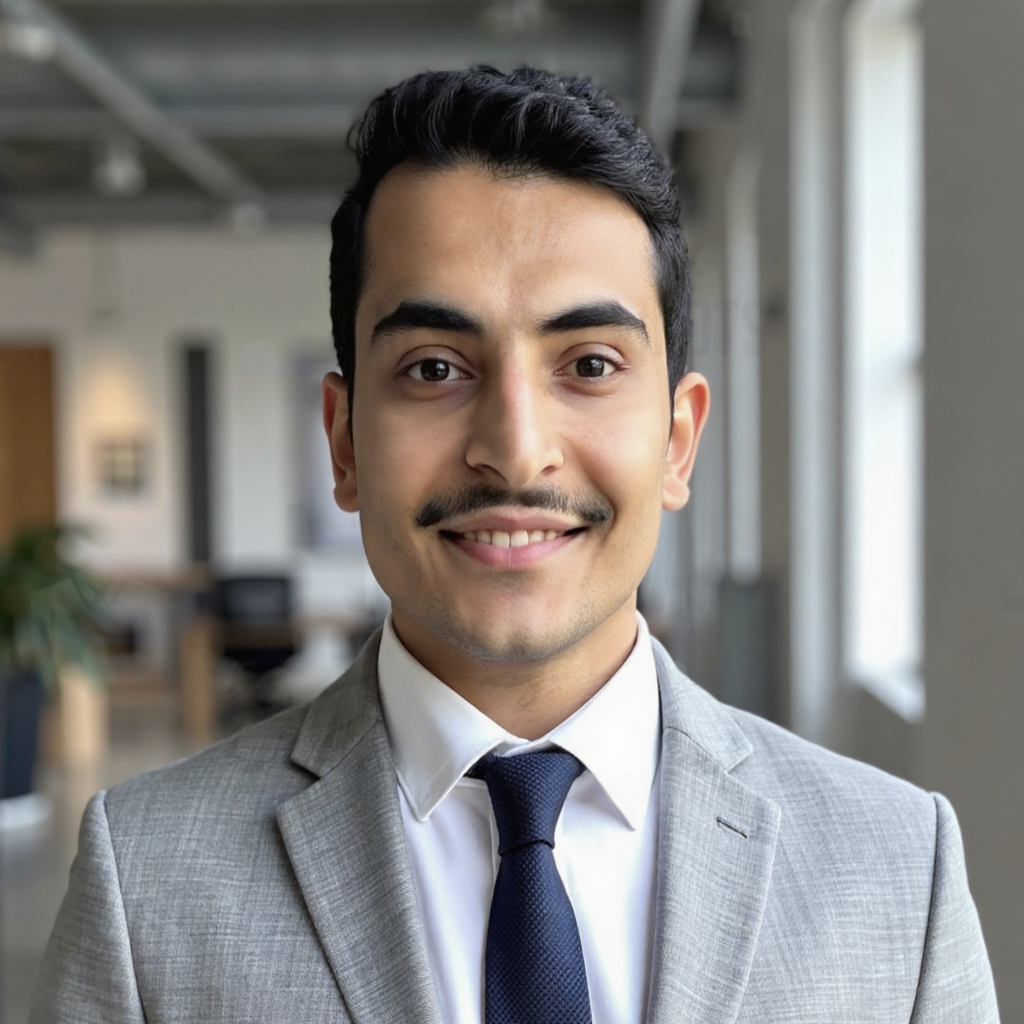
Mohammad Taha Askari
PhD Candidate in Electrical and Computer Engineering
University of British Columbia, Vancouver
University of British Columbia, Vancouver
I am a PhD candidate in Electrical and Computer Engineering at the University of British Columbia (UBC). My research focuses on machine learning for sequential and structured data, with an emphasis on probabilistic modeling and neural sequence models for communication systems with memory, noise, and nonlinear dynamics.
My earlier work introduced an interpretable low-pass filter model to analyze how probabilistic shaping interacts with nonlinear channels, and led to a sequence selection method that improves robustness to nonlinear interference. More recently, I developed a Bayesian carrier phase recovery algorithm for low-SNR regimes, and built a family of end-to-end neural sequence models, progressing from LSTM-based autoregressive encoders to a Transformer-based sequential architecture, that directly learn joint symbol distributions for nonlinear fiber channels. This work introduced rate-loss-aware training objectives and produced the first neural shaping method to outperform classical and sequence-selection baselines while accounting for all implementation losses.
University of British Columbia, Vancouver, Canada
Advisor: Prof. Lutz Lampe
University of British Columbia, Vancouver, Canada
Advisor: Prof. Lutz Lampe
Sharif University of Technology, Tehran, Iran
At UBC’s Data Communications Group, I conduct graduate research on probabilistic modeling and sequence design for communication systems with memory and nonlinear dynamics. I developed an analytical low-pass filter model to characterize how probabilistic shaping interacts with nonlinear channels and used it to guide interpretable system-level design.
I also proposed a sequence selection algorithm that improves robustness to nonlinear interference by exploiting temporal dependencies, and designed a Bayesian carrier phase recovery method that incorporates prior distributions for improved low-SNR performance. Building on these foundations, I developed a series of neural shaping frameworks, from LSTM-based joint-distribution learning to a Transformer-based sequential architecture with rate-loss-aware training, that achieve state-of-the-art performance on nonlinear fiber channels while remaining compatible with practical PAS/FEC transceivers.
At Nokia Bell Labs, I led ML research on neural sequence modeling for joint distribution learning in optical fiber systems. I designed and implemented Neural Probabilistic Shaping (NPS), an autoregressive LSTM framework trained end-to-end via Gumbel-Softmax sampling, achieving substantial AIR gains over marginal-distribution shaping and sequence selection.
I extended NPS to Neural Probabilistic Amplitude Shaping (NPAS), constraining learning to unsigned symbols for full compatibility with practical PAS/FEC transceivers. I then developed Sequential NPAS (Seq-NPAS), a block-less Transformer-based encoder with a rate-loss-aware training objective; the first neural shaping method to outperform all baselines after accounting for all implementation losses.
At Roche Canada, I worked in an applied ML and software engineering environment on large-scale sequencing data. I built pipelines for feature extraction, dataset generation, and neural network training to support anomaly detection workflows.
I developed and optimized weakly supervised deep learning models, including a multi-label architecture for multi-class anomaly detection and segmentation. I also integrated model evaluation, interpretability, and computational complexity analysis to support iterative improvement.
2026 European Conference on Optical Communication (ECOC)
Online Access2026 Optical Fiber Communications Conference and Exhibition (OFC)
Online Access2025 European Conference on Optical Communication (ECOC)
Online Access2024 European Conference on Optical Communication (ECOC)
Online Access2023 European Conference on Optical Communication (ECOC)
Online AccessMaster's Thesis, UBC
Online AccessJournal of Lightwave Technology
Online Access2022 European Conference on Optical Communication (ECOC)
Online AccessPoster at 17th Canadian Workshop on Information Theory (CWIT)
2025
Awarded with an amount of $8,200 to support graduate research.
2023
Nominated for this prestigious fellowship with an amount of $18,200 per year.
2021
Awarded with an amount of $5,000 to support graduate research.
2015-Present
Recognized for being in the best ranks of the University entrance exam.
Loading...
Electrical and Computer Engineering Department, UBC, Vancouver, BC V6T 1Z4, Canada